
How an Auto Repair Shop Was Losing $27,000 a Month to Missed Calls
A missed call is a customer you may never get back. Yet many businesses don't even realize the extent of the problem. That is what happened to a small auto repair shop, where Cloud PBX statistics showed how much revenue the business was regularly losing to competitors.
What the Owner Noticed
Alex runs an auto repair shop in a small town. Nearly all of his customers reach out by phone: people call and book an appointment. Technicians used to answer the calls, and for a long time that seemed good enough: business was steady, and a few missed calls didn't look like a big deal.
When Alex opened Cloud PBX reports, he saw how many potential bookings the shop was losing. In July only, the system recorded 214 missed calls out of 1,070 incoming calls, meaning almost every fifth customer got no answer. Even if only two of these callers a day went to competitors, with an average repair bill of $450, the shop was losing more than $27,000 in monthly revenue.
“We always thought customers would just call back later. It turned out that many of them switch to competitors after the very first unanswered call,” Alex says.
After reviewing several months of data, Alex saw that the pattern kept repeating. He decided to find out why some calls went unanswered and how to fix it.
Why It Mattered
For an auto repair shop, almost every incoming call is a customer ready to pay: their suspension is knocking, or their car would not start in the morning, so they're late for work.
That driver needs the problem fixed as soon as possible. Usually, they open an online list of repair shops nearby and dial several companies in a row. If one doesn't pick up, they simply call the next one.
Once a customer finds a shop they like for repair quality, price, and service, they tend to stick with it. That is why a single missed call may cost the business not just one repair job, but several future visits.
How They Started Using Cloud PBX Statistics
The company didn't rush to hire extra administrators. First, the team decided to understand where the losses were coming from. Cloud PBX statistics were enough for that: the reports showed exactly where the problems happened and what needed to change to keep more customers.
1. They Started Monitoring Missed Calls
The missed call processing report showed how many calls went unanswered and which customers still needed a callback. The technicians weren't doing anything wrong: when they were busy with cars and customers, the phone naturally took a back seat.
“Picture a tech checking in a car, talking to the customer in the service bay, and hearing the phone ring. Of course, in that situation they would not cut the customer off mid-sentence and run to answer the call. But when we looked at several months of statistics, it became clear how much those missed calls were costing us.”
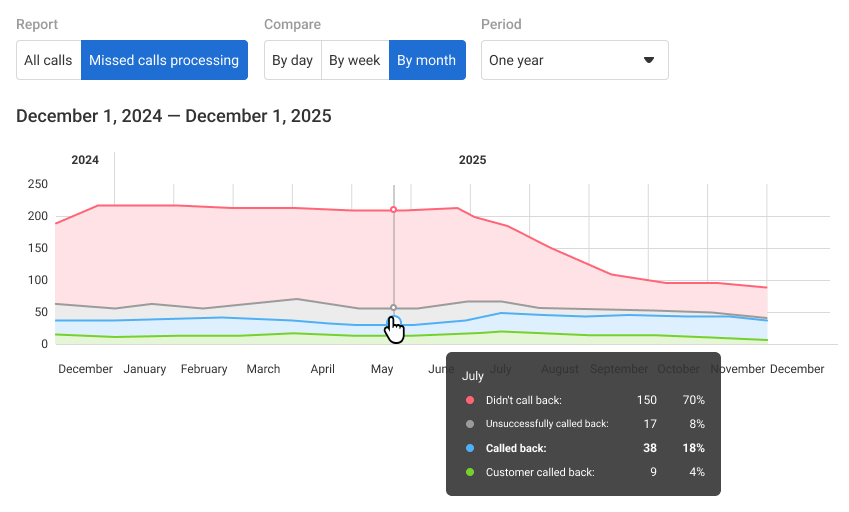
Alex realized he couldn't eliminate missed calls completely, but he had to manage them: record every missed call and contact the customer quickly, before they booked with a competitor.
To do this, they set up SMS notifications for every missed call. Now the owner and the technicians receive the customer's number right away and can call back quickly. The missed call processing report also helps them track progress: what share of calls still went unanswered this week and how the situation changes over time.
2. Adding More Coverage During Peak Call Hours
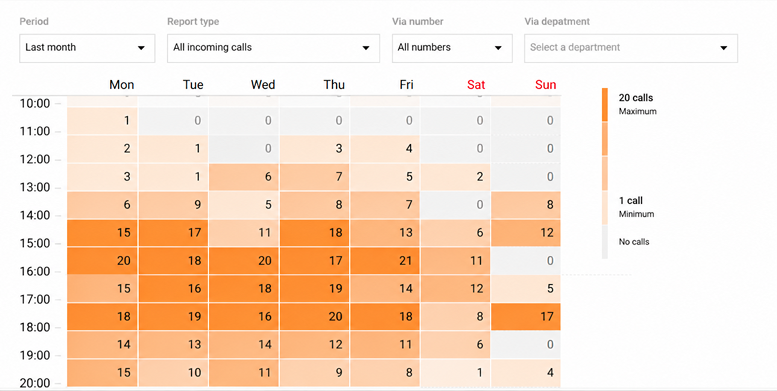
The hourly report showed that during business hours, most calls were missed at peak times, roughly from 3 p.m. to 6 p.m. At that time, technicians were finishing current jobs, handing cars back to customers, and checking in cars for the next day, so they just couldn’t answer every call.
“We look at the hours with the most calls. That tells us when one or two people need to be covering the phone.”
With that in mind, the auto repair shop reshuffled the workload and started adding coverage in advance for peak hours. During those hours, Alex answered calls himself or assigned an employee to the phone.
3. Answering Calls After Hours
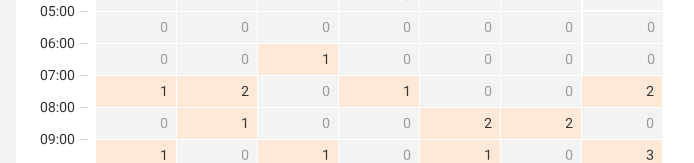
The same hourly report showed that some customers called early in the morning or late in the evening, when no one was at the workplace. To stop losing those calls, the technicians began taking turns on after-hours duty, and call forwarding helped them take calls on their cell phones even when they were away from the shop.
“When a technician gets to work in the morning, they open the call history in Cloud PBX, listen to the call recordings from after hours, and already know what car the customer drives and what's wrong with it. As a result, the customer does not have to explain everything twice, and the shop comes across as organized and attentive.”
What Changed After a Few Months
The statistics showed Alex exactly where customers were slipping away: which hours were understaffed and how fast the team needed to call back. This helped the shop build a clear missed-call routine and distribute the workload more evenly among technicians.
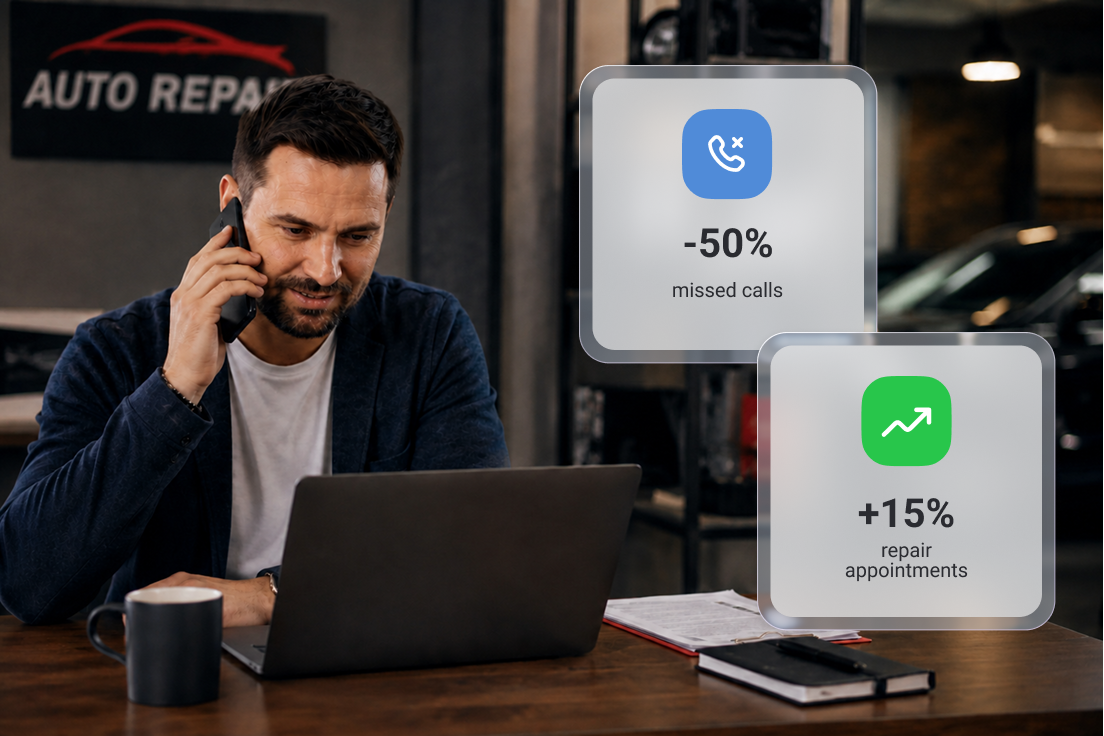
In three months, the shop cut missed calls in half and increased repair bookings by 15%. That brought in more work: the schedule was almost fully booked, and revenue grew without extra advertising spend. As a result, the auto repair shop is running close to its capacity, and the owner is now considering opening a second location.
Takeaway
If a company uses Cloud PBX only to receive and route calls but never looks at the statistics, some inquiries are lost unnoticed: customers cannot get through, and missed calls aren't always returned in time.
In this example, call statistics revealed the real reasons behind the missed calls and helped build a simple missed-call workflow: log every call and get back to the customer quickly, before they go to a competitor. The result was fewer lost customers and higher revenue.
Any company where calls are one of the main ways for customers to get in touch can estimate these losses. Open the missed call processing report in Cloud PBX for the past month. See how many calls employees did not answer and did not call back later. Multiply that number by your sales conversion rate and average order value. This will show how much revenue you are losing due to unprocessed calls.